TRADE
Charts, order entry, positions, live tape and order flow.
 RSE 2PLAYER GUIDEPLAY ON ROBLOX
ROBLOX STOCK EXCHANGE 2
A straight-to-the-point guide to the rebuilt RSE 2 terminal: orders, charts, order flow, funds, player companies, property, meme coins and the tools behind them.
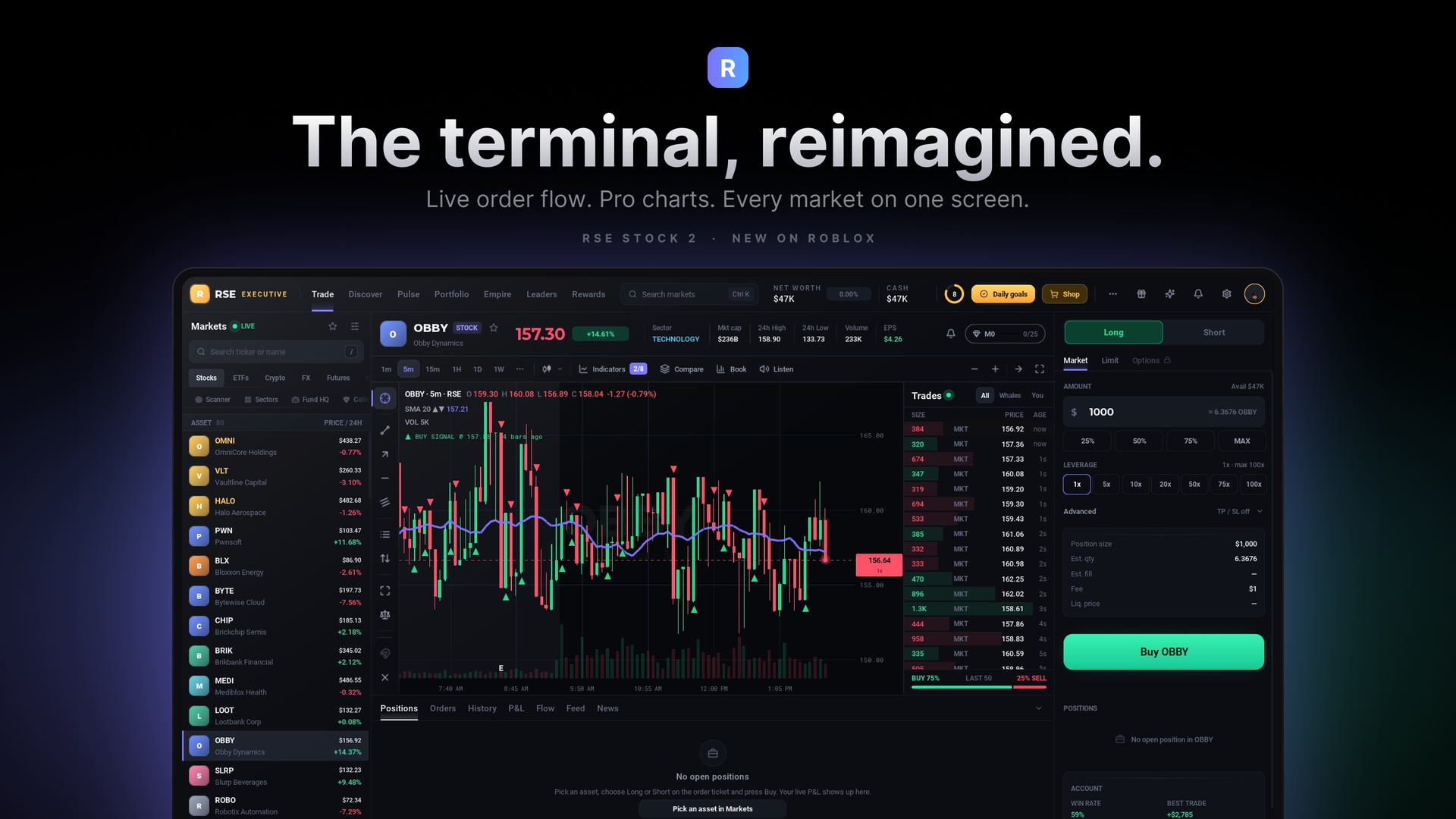
The new terminal is arranged around what you are trying to do: find a market, trade it, review the result, then build the account beyond the chart.
Charts, order entry, positions, live tape and order flow.
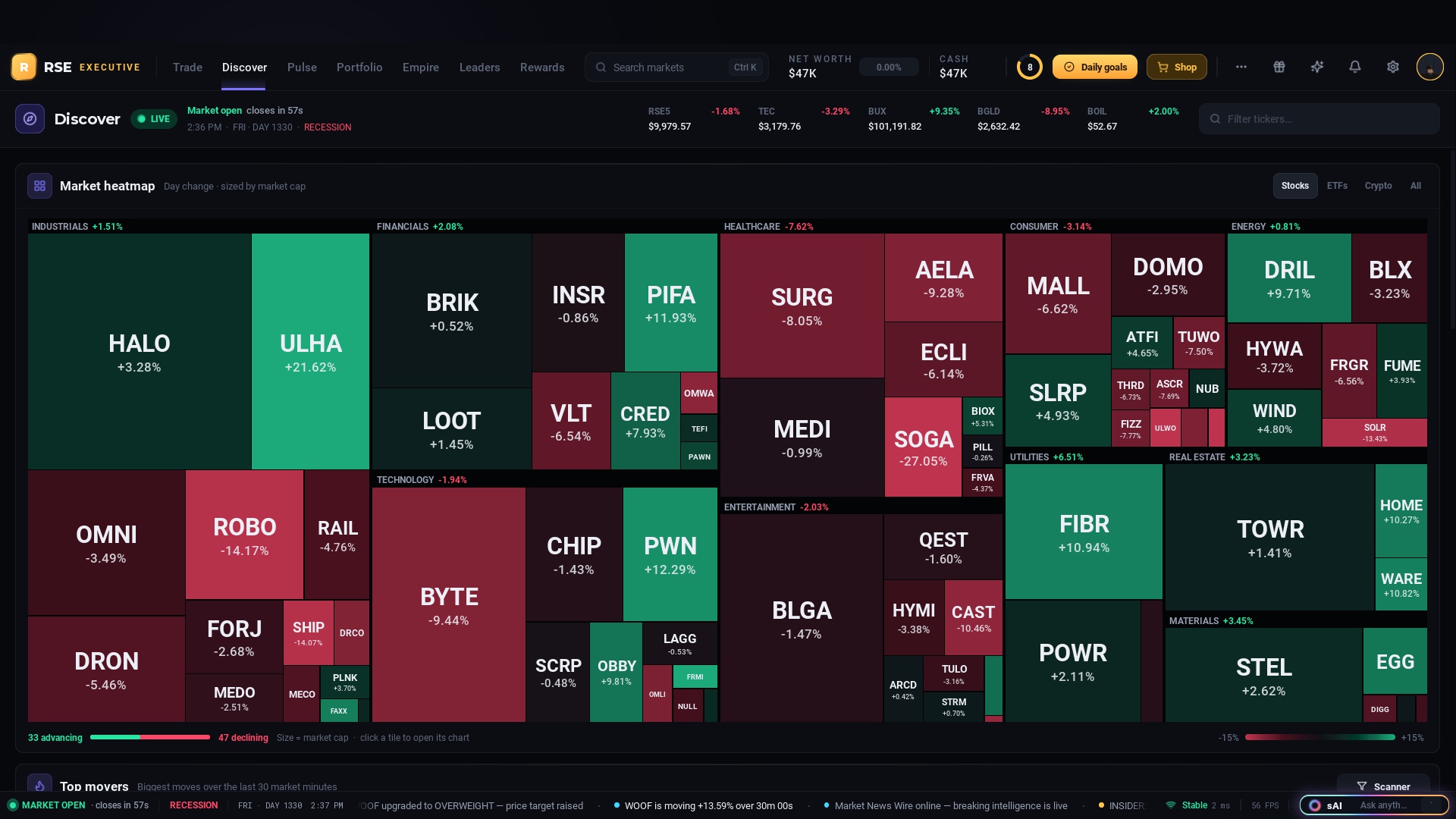
Heatmap, movers, sectors, screener, IPOs and the event calendar.
Launch, research and trade player-made meme coins.
Holdings, equity curve, P&L, exposure and account analytics.
Property, bonds, vault, player companies and long-term assets.
Net worth, returns, funds, companies and seasonal rankings.
Daily goals, challenges, career milestones and progression.
The ticket on the right controls direction, order type, size, leverage and exits. Read the estimate before sending the order; that is where the cost and liquidation risk become real.
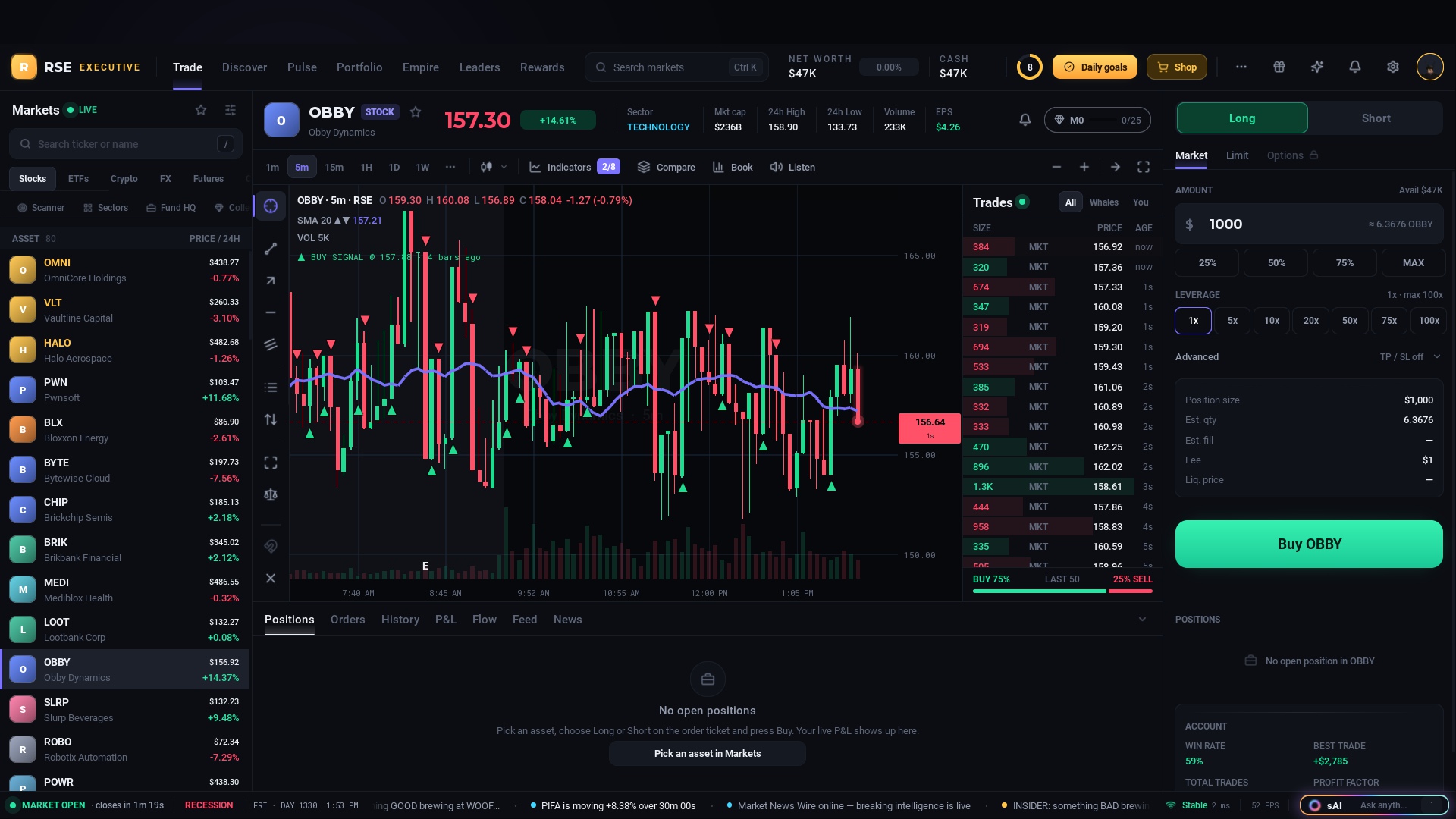
Long gains when price rises. Short gains when price falls and unlocks at level 3.
Market fills now near the available price. Limit waits for your chosen price. The Options tab appears when that market is available.
Enter cash or use 25%, 50%, 75% and Max. Leverage increases exposure and liquidation risk; 1x is the safest place to learn.
Open Advanced to attach take-profit and stop-loss orders. The preview shows position size, estimated quantity, fill, fee and liquidation price.
After the fill, use the position row to reduce or close. Opening the opposite direction is a new trade; it is not the safe way to close the current one.
The current tutorial prepares that setup for you. Make the buy, then fully close the verified position. Completion pays the existing $2,500 training bonus; the separate $750 first-close reward still applies.
The rebuilt engine adds a busier open and close, quieter lunch, volatility clusters, news follow-through and liquidity around round numbers. Use the book and tape to see what is happening, not to predict with certainty.
Stock, crypto, futures and forex prices are generated from each player's own market state, so two players do not necessarily see the same candle. Player-company stocks are the exception: everyone sees the same player-stock quote and candles.
Because regular markets are personal, other players' resting orders are shown by their distance from market instead of pretending everyone shares one absolute price.
Levels persist, refill and thin after trades. Round-number walls can absorb flow or break.
See size, side, age and whether prints are yours, whales or the wider market.
Buy/sell pressure and nearby walls are clues. They can change before your order fills.
Open and close are more active, midday is quieter, and stock resets do not close crypto.
Your main trading floor. News, sectors, dividends and IPOs feed into it.
Always open, faster-moving and available while stock sessions reset.
Leveraged contracts. The first 5x leverage tier unlocks here too.
Currency pairs with rate sensitivity, carry and cross-market relationships.
Long calls and puts. Premium is the most you can lose on the contract.
Companies founded by players, with a shared quote, candles and public market.
Levels unlock new markets, but the bigger goal is turning a trading account into a fund, a company portfolio and a property empire.
Trade falling markets.
First leveraged tier.
Currency desk opens.
Start a real track record.
Run persistent bots.
Build or invest.
Claim the first tile.
Calls and puts open.
FUND HQ V2
NAV starts at 100 and moves with actual trading performance. Cash rewards and deposits do not fake the track record. Use that record to pitch NPC investors, set terms, earn management and performance fees, and publish quarter results.
Choose a sector and identity, run private quarters, raise rounds, then IPO or directly list. Public quotes use shared prices and candles. Other players can buy shares through the normal ticket.
Buy tiles, build sector-specific property, collect rent jars and complete state sets. Occupancy, sector cycles and events change the value of the buildings.
Meme coins live on Pulse. Check holder concentration, dev activity, snipers, volume and liquidity before buying. Graduation moves eligible new coins into locked liquidity.
These desks are part of the same account. They give idle cash a job, create new setups and add goals that are not just “make the number bigger.”
Choose government, corporate or high-yield debt. Longer terms pay more; lower ratings add default risk and recovery value.
Energy, metals and agriculture have seasonal activity, forecasts and event risk. A forecast can be right or bust.
Your live fund is parked while the run is active. Hit the target before the challenge account falls to its bust floor; rewards are permanent perks and trophies, not cash.
Vault cash earns a fixed game-day rate while it is stored. It is safer and slower than deploying the money in markets.
Bots use real portfolio cash and can continue through offline market processing. Allocation, speed and expertise are upgradeable.
Season rankings reward consistent trading. The Trader Pass is a cosmetic progression track; it does not sell trading cash.
The terminal gives you several ways to move from a market-wide view to a specific setup. Use more than one signal and decide the exit before the entry.
See breadth and sector strength before picking a ticker.
Watch resting liquidity and the prints actually hitting the market.
Read buy/sell pressure, confidence and nearby support or resistance walls.
Filter momentum, reversal, volume and catalyst setups.
Paper-trade old tape without risking your live account.
Judge rules by trades, return and drawdown—not only win rate.
Ask about quotes, news, risk, watchlists, indicators or a trade setup.
Build chart formulas, signals, labels, guides and shaded clouds.
name "Trend Pulse"
pane price
fast = ema(close, 12)
slow = ema(close, 26)
signal = fast - slow
plot fast color cyan
plot slow color gold
label crossover(fast, slow)
INDICATOR LAB
Add a preset, write a formula, or open RSEScript for named variables, plots, labels, horizontal guides and clouds. Scripts are parsed and bounded—they are not executable Lua.
A small checklist catches most avoidable mistakes: entering the wrong direction, oversizing, missing an event or finding out too late that the session is thin.
No. Regular markets are personal to each player. Player-company stocks are the exception: everyone sees the same player-stock prices and candles.
No. NPC LP capital is tracked as fund AUM, not spendable account cash. Your own trading book remains the capital actually taking risk.
No. They organize market information and help test an idea. You still choose the size, direction and exit, and every setup can fail.
Liquid progress restarts for permanent launch-cash and XP advantages. Fund HQ closes the old vintage and opens the next one without treating the reset itself as a trading loss.